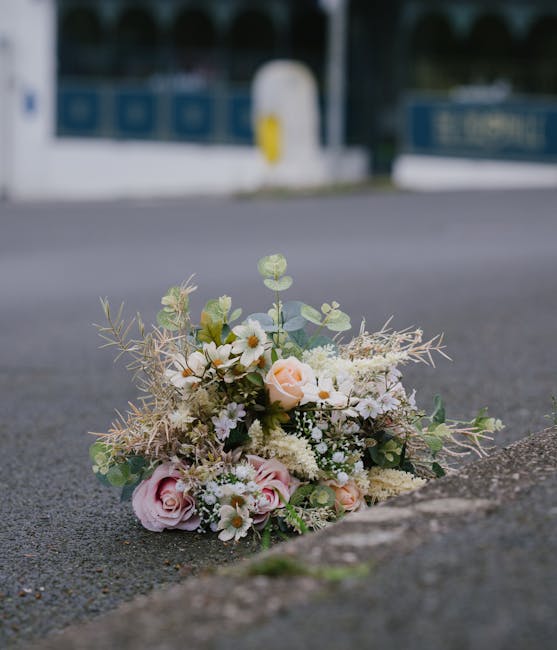
Do you need a permit for floral signage on W1 pavements?
Posted on 12/10/2026
If you are planning floral signage on a W1 pavement, the short answer is: very possibly, yes - or at least some form of permission, consent, or licence may be needed before anything touches public highway space. In central London, that usually matters more than people first expect. A display that looks simple in the shop window can become a street use issue the moment it sits on the pavement, leans into the pedestrian flow, or risks blocking access.
That is why this question comes up so often. Business owners want something beautiful and seasonal, but they also want to avoid complaints, fines, or being told to remove the display by the council or highway officers. Truth be told, the rules can feel a bit dull until you are the one standing outside with flowers, a ladder, and a deadline. This guide breaks down the practical side of floral signage on W1 pavements, what usually needs checking, how permissions tend to work, and how to plan a display that is attractive and sensible.
We will also look at when a floral pavement feature may be treated like temporary street furniture, what makes a display risky, and which checks should happen before installation day. If you are in Marylebone or nearby, and you want a clean answer without legal waffle, start here.
Table of Contents
- Why it matters
- How the process works
- Key benefits and practical advantages
- Who needs this and when it makes sense
- Step-by-step guidance
- Expert tips for better results
- Common mistakes to avoid
- Tools, resources and recommendations
- Law, compliance, standards and best practice
- Options, methods and comparison
- Case study or real-world example
- Practical checklist
- Conclusion
- Frequently asked questions
Why Do you need a permit for floral signage on W1 pavements? Matters
On a busy W1 street, the pavement is not just empty space. It is part of a shared public route used by pedestrians, wheelchair users, pushchairs, delivery riders, people with luggage, and the odd hurried local balancing a coffee and a phone. A floral sign that seems harmless for a few hours can become a trip hazard, an obstruction, or a nuisance if it narrows the walking line too much.
That is the main reason permissions matter. Local authorities care about access, safety, visibility, and the proper use of highway land. A floral sign may also attract attention from nearby businesses, building management, or residents if it is oversized, noisy to set up, or left out longer than expected. A pretty display can go from charming to awkward surprisingly fast. We have all seen that one pavement arrangement that looked lovely at 9am and looked like a bit of a tangle by lunchtime.
There is also a wider brand reason. If your display is approved and well planned, it tends to look more professional. Customers notice that. It says you thought ahead, respected the street, and did not just hope for the best. In a place like W1, where presentation matters, that subtle difference counts.
Another practical reason is liability. If something falls, blocks access, or damages the pavement, you may be left dealing with avoidable problems. A proper check at the start is much cheaper than sorting out a complaint later.
In plain terms: floral signage on a pavement is often less about the flowers themselves and more about where they sit, how big they are, how long they stay, and whether they affect public access.
How Do you need a permit for floral signage on W1 pavements? Works
There is no single universal answer that fits every street, every frontage, or every type of floral signage. The right permission can depend on the exact location, the nature of the display, and whether the installation is private or public-facing. Some arrangements are entirely inside the boundary of a business and may not need highway permission. Others sit partly on the pavement and are likely to trigger a formal check.
Usually, the process starts with a simple question: is the display inside private land or on the public pavement? If it is fully on private land, you may still need to consider lease terms, landlord consent, shopfront rules, or building regulations depending on the structure. If it extends onto the pavement, you are entering public realm territory, which is where permits, licences, or consent processes become relevant.
In practice, councils tend to care about a few core things:
- Whether pedestrians can pass comfortably and safely
- Whether the display blocks sightlines or entrances
- Whether the installation is fixed, freestanding, or temporary
- How long the floral signage will stay in place
- Whether it includes frames, stands, plinths, or other objects beyond flowers alone
That last point is easy to miss. A floral sign is rarely just flowers. Often it is a frame, board, weighted base, planter, or decorative structure wrapped in blooms. The structure is usually the part that causes the biggest issue, not the petals themselves.
If you are arranging something for a launch, a seasonal promotion, a wedding-related frontage, or a luxury retail display, it is sensible to treat the project as a space-use question first and a design question second. That mindset saves time.
If you are already looking at wider floral services, a local florist can help with the design side, while your property manager or organiser checks permissions. For regular local ordering and delivery needs, pages like florist Marylebone W1 and flower delivery Marylebone W1 can be useful reference points for the broader flower side of the project.
Key Benefits and Practical Advantages
Getting the permission side sorted before installation might not be the exciting part, but it brings some real advantages. The first is obvious: less risk of being asked to remove the display. That alone can save a great deal of fuss, especially if the arrangement was meant for a launch day, media moment, or weekend footfall.
There is also the visual upside. When floral signage is planned properly, it looks more intentional. It sits where it should sit, not awkwardly squeezed into a gap or positioned at an angle because somebody was improvising five minutes before opening. That sense of polish matters in W1, where details are noticed.
Other benefits include:
- Better safety: fewer trips, collisions, or blocked access points
- Stronger presentation: the display reads as part of the brand, not a last-minute add-on
- Less disruption: staff can install and remove it cleanly
- More confidence: you are less likely to worry about complaints mid-event
- Better planning: you can choose the right size, base, and materials from the start
There is a commercial angle too. If you are using floral signage to draw attention to a shop, salon, venue, or hotel, the pavement itself becomes part of the customer experience. Done well, it can create a lovely first impression. A passer-by sees the flowers, slows down, and looks in. That little pause matters.
And let's face it, nobody wants to spend money on an elegant floral feature only to discover the structure is too wide for the frontage or too awkward to place safely. Planning ahead is simply good value.
Who This Is For and When It Makes Sense
This topic matters to a fairly wide group of people, but the pressure is usually highest for businesses and event organisers in busy central areas. If you are in W1, you are likely dealing with tighter pavements, more pedestrian traffic, and a higher expectation of neatness than in a quieter suburban setting.
You may need to check permission if you are:
- A retailer planning a floral doorway or pavement display
- A restaurant, cafe, or hotel creating seasonal frontage decoration
- An event planner styling an entrance for a launch or private function
- A wedding supplier working near a venue on a public pavement
- A florist or designer installing branded floral signage for a client
- A property manager overseeing temporary decorative features outside a building
It makes sense especially when the display is:
- Freestanding rather than fixed to the building
- Likely to remain in place for more than a few hours
- Placed where people queue, walk, or wait
- Large enough to be noticed from a distance
- Likely to include rigid supports, boards, or bases
For example, a small seasonal wreath on a private door is a different matter from a floral promotional arch partially sitting on a footway. Same "floral signage" broad idea, very different public impact. That distinction is what often decides whether permission is likely to be needed.
If you are working on a larger celebration or trade-facing project, it may also help to look at related product or service pages such as wedding flowers Marylebone W1 or corporate accounts if the floral display is part of an ongoing business relationship.
Step-by-Step Guidance
If you want to avoid confusion, the easiest way to handle floral signage on a W1 pavement is to work through the decision in a structured way. Not glamorous, I know. But it works.
- Confirm the exact location. Is every part of the display on private land, or does any part sit on the public pavement?
- Measure the footprint. Get the width, depth, and height of the proposed arrangement. Do not guess. A few inches can matter more than you think.
- Check access routes. Make sure pedestrians can still pass without squeezing, stepping off the kerb, or walking into the road.
- Identify the structure. A flower arrangement may need a frame, base, weights, or planters. Those details affect whether permission is needed.
- Ask about local requirements. If the pavement is public highway, check the relevant council or property control process before installation.
- Review timing. Some displays are fine for short events but not suitable for overnight placement.
- Prepare installation and removal plans. Know who is responsible, what time it will be installed, and when it comes down.
- Document everything. Photos, measurements, and written approval help avoid arguments later.
A good rule of thumb: if you are relying on someone "not minding," that is not a plan. It is a hope. And hope is not the same as permission.
One practical tip from real-world experience: take a photo of the frontage before you move anything. It makes it much easier to show what changed, where the display sat, and how much pedestrian space was left. Handy if anyone asks questions.
Expert Tips for Better Results
The most effective floral signage is usually the least awkward to manage. That sounds obvious, but you would be surprised how often people choose a design that looks stunning in a mock-up and then becomes a headache on the street. In a dense area like W1, simple often wins.
Here are a few expert-level points that help in practice:
- Design for passability first. The display should never assume pedestrians will step around it comfortably if the pavement is already narrow.
- Use weighted, stable bases. Wind, foot traffic, and accidental knocks happen. A display that wobbles is a problem waiting to happen.
- Keep the footprint disciplined. Tall does not always mean better. Sometimes a lower, wider, more elegant arrangement is easier to approve.
- Choose materials carefully. Water, foam, and loose petals can create slip issues if they spill onto the pavement.
- Coordinate installation timing. Early morning setups can reduce disruption, especially on busy retail streets.
Another point people overlook: weather. A floral sign that looks crisp and fresh at 8am can look tired by late afternoon if it has been in direct sun, wind, or drizzle. In London, you can experience all three in one day. Charming, really.
If you are building a design around a specific mood, product line, or event theme, the florist's brief should mention access concerns as clearly as colour preferences. For example, a luxury front display may use structured arrangements from the luxury flowers collection, while a more modest frontage can be supported with any occasion designs. The point is not just beauty, but fit for purpose.
Common Mistakes to Avoid
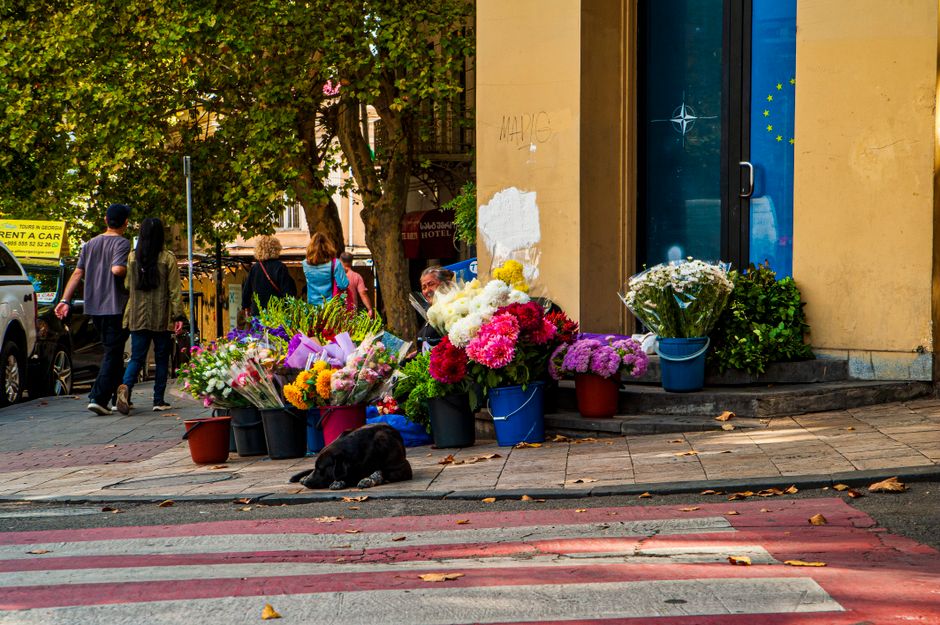
Most issues with floral signage on pavements are not dramatic. They are the sort of small, avoidable mistakes that turn into inconvenience, then complaints, then urgent phone calls. The sort you do not want on a Friday afternoon.
- Assuming small equals exempt. Even a modest display may need checking if it sits on public pavement space.
- Forgetting the base. A narrow flower arrangement on a large stand may take up more space than expected.
- Blocking line of travel. If people have to veer into the road, the display is probably too intrusive.
- Leaving it out too long. Temporary decor can become a problem when it starts acting like permanent furniture.
- Skipping written approval. Verbal reassurance is weak comfort if a complaint lands later.
- Ignoring nearby entrances. Doorways, shop access, service routes, and emergency access all matter.
- Using unstable materials. Lightweight frames, poor anchoring, and wet surfaces are a poor mix.
One very common mistake is not checking who owns or controls the space. People assume "outside my shop" means "mine." On a highway or public footway, that is not how it works. Not even close, really.
Another is overcomplicating the design. If the display needs constant adjustment, it is probably too fussy for a pavement setting. Simplify it and everybody wins.
Tools, Resources and Recommendations
You do not need a huge toolkit to manage floral signage well, but you do need the right kind of planning tools. A tape measure, a site photo, and a basic sketch go a long way. In our experience, a rough drawing with measurements is often better than a polished concept that leaves out the practical details.
Useful items and references include:
- Site measurements: width of pavement, clear walking path, and frontage depth
- Photographs: take shots from both approaching directions and from the doorway
- Simple layout sketch: mark the exact footprint of the display
- Weighting and stability plan: especially for freestanding pieces
- Installation schedule: who does what, and when
- Removal plan: important for temporary promotions or events
For flower selection and delivery logistics, local pages such as same day flower delivery Marylebone W1, next day flower delivery Marylebone W1, and flower shops Marylebone W1 can help with planning the floral side of the project. If the display is part of a wider product range, collections like best sellers or florist choice may also be practical starting points.
When the project is commercial, not just decorative, it is worth keeping the commercial and operational details together in one place. That includes payment arrangements, delivery windows, and if needed, terms around changes or cancellations. The less scattered the process, the easier it is to stay organised.
Law, Compliance, Standards, or Best Practice
This is the part most people would rather skip, but it is the part that protects the project. Floral signage placed on a pavement can raise issues around highway use, obstruction, public safety, accessibility, and sometimes landlord or lease consent. The exact permission route depends on the setting, so it is important not to assume one rule fits all.
Best practice in a W1 setting usually means:
- Keeping the footway clear enough for safe passing
- Avoiding trip hazards, sharp edges, or unstable frames
- Making sure the display does not block sightlines or entrances
- Checking whether the frontage is part of public highway or private forecourt
- Securing approval before installation if the display is in shared or public space
If your floral signage includes an attached board, message panel, branded structure, or any large freestanding element, it is even more likely to be treated as something that needs formal attention. The flowers themselves may be decorative, but the structure is often the thing that triggers the compliance question.
Accessibility should be taken seriously, not treated as an afterthought. That means thinking about people with limited mobility, wheelchairs, buggies, and anyone who needs a predictable route through the street. A display that is technically "passable" but uncomfortable to navigate is not good enough in practice.
Best practice takeaway: if your floral signage is anywhere near the public pavement, check access, check ownership, check approval, and keep a written record. That four-step habit prevents a lot of grief.
Options, Methods, or Comparison Table
Different floral display approaches carry different levels of risk and administrative effort. The right choice depends on the frontage, the duration, and how much pedestrian space you can safely preserve.
| Option | Typical use | Permission risk | Practical notes |
|---|---|---|---|
| Window-facing floral display inside the premises | Retail, hospitality, salons | Lower | Usually simpler if fully within private property and not obstructing exits |
| Frontage flowers at the property boundary | Shopfront styling, launches | Moderate | Needs careful checking if any part projects toward the pavement |
| Freestanding floral sign on the pavement | Promotions, events, branded messaging | Higher | More likely to need formal permission or consent because it uses public space |
| Large floral arch or structure partly on footway | Events, weddings, luxury activations | High | Needs proper measurement, stability planning, and access review |
The table is not a legal rulebook, of course. It is a practical guide. But it reflects a sensible truth: the more a display interacts with the public pavement, the more care it needs.
For short-term celebrations, a compact frontage arrangement may be enough. For a branded street-facing installation, you should expect more planning. That is just how it is.
Case Study or Real-World Example
Imagine a Marylebone boutique planning a spring launch. The team wants a floral sign outside the entrance with roses, greenery, and a branded message panel. It looks wonderful in the concept artwork, lovely in fact. But once the installer measures the pavement, the first draft turns out to be too deep for the available space.
Instead of forcing it, they revise the design. The floral frame is narrowed, the base is stabilised, and the message panel is moved to a position that keeps the walking route clear. The flowers still do their job. The street still feels inviting. And the business avoids a clash with public access rules.
That is the kind of adjustment that makes the difference between a successful display and an awkward one. Nothing dramatic, just sensible planning. You can almost hear the relief when the final version goes in and nobody has to shuffle sideways around it.
In another common scenario, a wedding supplier wants floral signage near a venue on a W1 pavement for a few hours only. The team checks the access route, confirms timing with the venue, and keeps all materials inside the approved area. The result is elegant and tidy, which is exactly what guests notice as they arrive. Tiny details, big effect.
Practical Checklist
Use this checklist before placing floral signage on a W1 pavement:
- Have you confirmed whether the display is on private land or public pavement?
- Have you measured the full footprint, including the base or frame?
- Will pedestrians still have a clear, comfortable route past it?
- Does the display avoid entrances, exits, and sightline problems?
- Have you checked whether any permit, licence, or consent is needed?
- Do you have written approval if the display uses public space?
- Is the structure stable enough for wind, knocks, and daily foot traffic?
- Do you have a clear installation and removal time?
- Have you photographed the site before work begins?
- Does the display stay compliant if weather conditions change?
If you can answer yes to most of those without hesitation, you are in decent shape. If not, pause and sort the gaps. It is much easier to fix the plan than to fix a street-side problem.
Conclusion
So, do you need a permit for floral signage on W1 pavements? In many cases, the answer is likely to be yes, or at least you should assume permission or consent may be required if the display occupies public pavement space. The safest approach is to treat the public footway as a shared, regulated space and check the exact requirements before installation.
That does not mean floral signage is difficult or off-limits. Far from it. It just means the most attractive results usually come from good planning, a measured footprint, and a clear understanding of where private frontage ends and public space begins. In a busy part of London, that clarity saves time, stress, and money.
Get the measurements right, keep access in mind, and choose a design that works with the street instead of fighting it. That is the sweet spot.
Get a free quote today and see how much you can save.
And if you are still at the early stage, that is fine too. Start with the site, start with the space, and the rest becomes much easier. A well-planned floral display can make a street feel brighter in a way people remember, even if only for a moment.
Frequently Asked Questions
Do floral signs on the pavement always need permission?
Not always, but if any part of the display sits on public pavement space, permission or consent is often worth checking. A display fully inside private property is usually simpler than one that uses the footway.
Is a floral sign treated the same as a sandwich board?
Not exactly, but councils may view them similarly if they both occupy pavement space and affect access. The material is different, yet the public impact can be much the same.
What if the flowers are attached to my shopfront wall?
If the display stays on your building and does not project into the public pavement, the permissions question may be less complicated. Even then, you should still consider property ownership, signage rules, and safe fixing.
How far can a floral display project onto a W1 pavement?
There is no safe universal guess here. The right answer depends on the local setting, the width of the pavement, and the exact approval route. Measure carefully and check locally before deciding.
Do temporary floral signs need less approval than permanent ones?
Usually, temporary displays are easier to plan, but temporary does not mean permission-free. Even short-term installations can need approval if they use public space or create an obstruction.
Can I put a floral arch outside my business for a launch event?
Possibly, but an arch is usually more likely to need checking because it is larger and more structural than a simple arrangement. The footprint, stability, and access route all matter.
What is the biggest risk with floral signage on pavements?
The biggest risk is usually obstruction: blocking pedestrians, creating a trip hazard, or narrowing access too much. Weather, instability, and poor placement are common contributors.
Should I speak to the council before installing floral signage?
If the display will be on public pavement space, yes, that is the sensible move. A quick check up front can save a lot of trouble later. A very boring task, perhaps, but a useful one.
Do I need landlord approval as well as council permission?
Sometimes, yes. If you rent the premises or operate under a lease, the landlord or managing agent may have their own rules even if the public-space issue is covered.
Is floral signage on a pavement allowed for weddings in W1?
It can be, provided the setup is properly planned and any required permission is in place. Wedding installations often look effortless, but the best ones have a lot of coordination behind them.
What happens if I install it without checking?
You may be asked to move or remove it, and in some cases you could face complaints or other consequences. It is much easier to do the checks first than explain the display later.
What should I prepare before asking for approval?
Have measurements, photos, a rough layout, timing details, and a clear description of the materials and structure. The clearer the proposal, the easier it is for someone to assess it properly.